

This Week in African Startups
11.19.2022 #Squord

This Week in African Startups is a new series to share weekly news on the African business and startup ecosystem. Think of this as your weekly guide to catchup on African business & startup ecosystem.
We enjoyed reading and responding to your feedbacks on our previous posts, and we love to keep hearing from you, our readers. So, feel free to reach out in the comments section or via email!
These are our hot topics for this week:
- FTX collapse impacts the African startup ecosystem with NestCoin
- Future Africa announces its transition to a Venture studio model
- Fintech funding for early-stage startups drops by 58% in Q3
- Paystack secures a payment service provider license to operate in Kenya
- Healthlane raises concerns with its reported Series A round
FTX collapse impacts the African startup ecosystem with NestCoin
Earlier this week, African blockchain company, Nestcoin, laid off some its employees as a result of the impact the FTX collapse had on its business. Nestcoin, which was founded a year ago by Yele Bademosi, had funds (cash and stablecoins) held in the now bankrupt FTX. It is quite unclear the exact level of exposure but it will have to be significant for Nestcoin to cut at least 30 people from its workforce.
To provide some context, Nestcoin closed its pre-seed round of $6.45million earlier in February and held some of those funds in FTX’s stablecoin. FTX, the distressed firm that has now filed for Chapter 11 bankruptcy in the United States, has put the funds of at least 1 million investors, and 100,000 creditors at risk.
Almeada Research, the quantitative research firm that is closely related to FTX, is one of the investors on Nestcoins captable and also invested in other African crypto companies like MARA, Jambo, VALR and Bitnob. It is unknown the effect of FTX’s collapse on these projects, but my guess is that it won’t be good especially with the emergence of Nestcoin’s struggles.
Many point to lack of corporate governance and inadequate risk management as the issues with FTX, a company that allegedly had no full-time accounting staff. Interestingly these same issues should be taken more seriously in the African crypto space and the African startup space in general. Nestcoin held operational assets (what we believe to be funds for day-to-day operations such as salaries, rent etc.) on FTX, and made it clear that they did not actively trade with the asset, but simply placed it there, similar to how one places their cash in a checking account. Three months ago, FTX was one of the largest crypto exchanges, so storing your operational assets there may have felt safe. However, with adequate risk management, one should have their operational assets in multiple platforms, the ratio between assets held in crypto versus assets held in cash should be data-driven and based on corresponding expenses paid in crypto versus corresponding expenses paid in cash. Kudos to Nestcoin for their transparency to the public, the biggest takeaway from this news is, how are other African startups revising their risk management strategy?
Future Africa announces its transition to a Venture studio model
According to information gathered by TechCabal, there have been some resignations and layoffs at Future Africa due to its strategic decision to pivot from a traditional VC to a venture studio. This means it will invest in less startups but will be heavily involved in the day-to-day activities of its portfolio companies.
Future Africa was launched by co-founder of Andela and Flutterwave, Iyin Aboyeji in 2020. They are seen as bold investors helping to shape the future of Africa, and a firm with a unique perspective on what the optimal funding model of Africa could be. As such, their pivot is interesting. What does this mean about the views on the VC model as it relates to Africa? Would we see more Venture Studios spring up?
Fintech funding for early-stage startups drops by 58% in Q3
CB insights published a report this week on the global state of Fintech in Q3 and it was shocking to see the decline in African fintech. Although many analysts and investors predicted that Africa would be insulated from the global economic crisis, the data says otherwise.
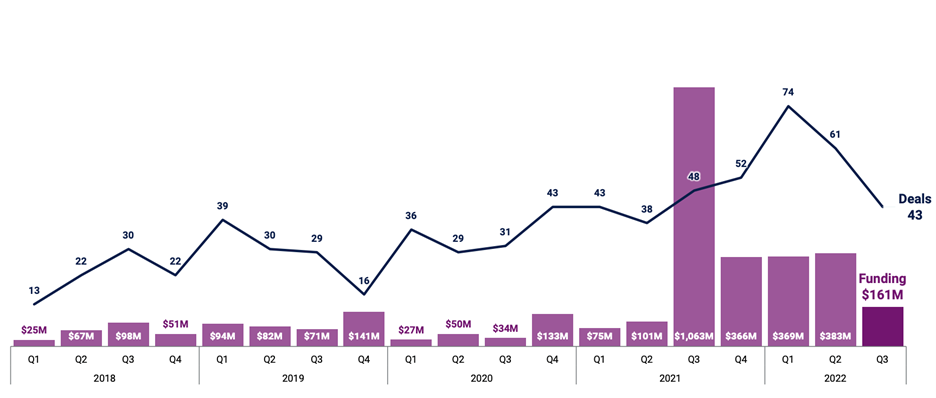
Table from CB Insights representing the African Fintech in 2023
As seen above, funding for early-stage fintech startups dropped by 58% between Q2 and Q3 this year. Also, there were no new unicorns and mega-round deals (funding round of $100million and above) completed this past quarter.
Paystack secures a payment service provider license to operate in Kenya
Paystack, the Nigerian payment system startup that currently operates in Nigeria, South Africa and Ghana has been granted a license by the Central Bank of Kenya to operate in Kenya. It is reported that they have already begun beta testing of their product in Kenya.
This license will enable them offer business the opportunity to receive local and global payments, one time and recurring card payments.
Healthlane raises eyebrows with its reported Series A round
Healthlane, a Cameroonian healthtech startup that was launched in 2021 has come under some scrutiny after research conducted by Techpoint Africa highlighted some major concerns about the startup. The report shows that a few Techpoint Africa staff tested the platform and the results were damning. According to Awosanya, when he submitted a request on the platform to take a vaccine, “The initial response was that the doctor wasn’t around,” Awosanya recalls, “Later, I was told that their office was being renovated and that they’d come to my house or office to administer it. But they never did. And afterwards, their app stopped working.”
With these looming concerns, Healthlane has also not paid its employees for months; their Nigerian staff have not been paid for 4 months. The workplace has also been reported to be unstable with layoffs seen to be more prominent in 2022.
According to the article, there seems to be a lot of questions around the operations and functionality of this company and their product. Their facility at Lekki has also been reported to be vacated and their signage on the building is no longer present. Could this company be in a deep crisis that its shareholders/investors are not aware of? I hope these are issues the potential investors are asking and looking into if they’re indeed looking to raise a Series A round.
Boom…. that wraps up this week’s gist. Feel free to like, comment and share with your friends. Also, kindly subscribe to this newsletter so you can get our weekly updates and reports on everything regarding the African startup ecosystem.
For fun, we’ll wrap up this week with a poll.
See you next week!